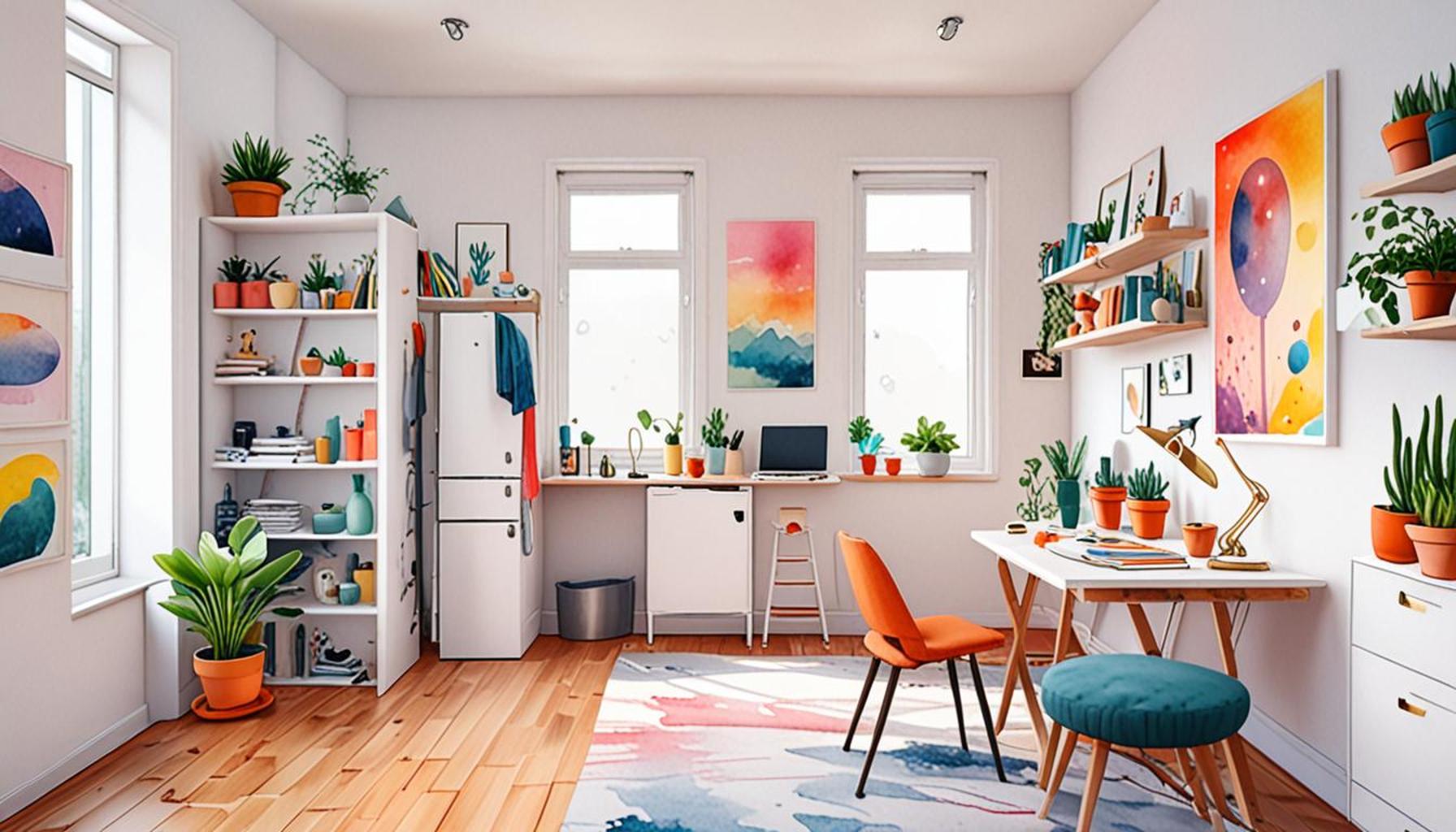
Minimalism and the Art of Selecting: How to Decide What to Keep in Limited Spaces
The Power of Intentional Living
In an age dominated by consumerism and excess, the philosophy of minimalism stands out as a beacon for those seeking a life of intention and purpose. This approach doesn’t merely advocate for a reduction in physical possessions; instead, it encourages a profound shift in mindset. By focusing on what truly matters—be it experiences, relationships, or personal well-being—individuals can reshape their lives in meaningful ways. Especially in urban environments, where living space tends to be limited, navigating the art of selecting which items to keep becomes a vital skill.
The Challenge of Limited Spaces
When confronted with the constraints of limited living spaces, thoughtful decision-making is essential. Here are some strategies to declutter and genuinely embrace minimalism:
- Identify Essentials: Start by sorting your belongings into categories. What do you need daily? Items such as a reliable set of cookware, essential clothing, and basic toiletries often make the cut. Conversely, consider the dusty souvenirs from long-forgotten vacations that provide more clutter than joy.
- Emotional Attachment: It’s common to hold onto items due to sentimental value. Ask yourself if these belongings actively contribute to your current happiness. A well-loved childhood toy or a family heirloom may evoke nostalgic feelings and warrant a place in your home, while outdated gifts or clothes that no longer fit may simply weigh you down.
- Functionality: Evaluate each item’s utility in your life. The rule of thumb here is to consider the last year: if an object hasn’t served a purpose—be it practical use or emotional fulfillment—it may be time to part ways. This includes everything from kitchen gadgets that have never seen a meal prep to that treadmill doubling as an expensive coat rack.
Invitation to Explore
The journey towards minimalism is not just about shedding possessions; it invites an exploration of self and surroundings. This process demands honesty and creativity, pushing individuals to redefine their priorities and discover innovative ways to harmonize their living spaces with their lifestyles. For instance, embrace multifunctional furniture that serves several purposes—such as a bed with storage underneath or a dining table that can also be a workspace—to maximize utility without sacrificing style.
As you delve deeper into minimalist principles, you’ll invariably find techniques to streamline your space and, in turn, transform your lifestyle. Consider diving into books like “The Life-Changing Magic of Tidying Up” by Marie Kondo or “Essentialism: The Disciplined Pursuit of Less” by Greg McKeown for further insight. Both provide practical frameworks and encourage a philosophical shift that goes beyond mere decluttering. Keep in mind that minimalism is not a one-size-fits-all approach; rather, it is a customizable journey that can significantly enhance your quality of life.
DISCOVER MORE: Click here for insights on conscious consumption
Understanding the Art of Decision-Making
As you embark on your minimalism journey, it’s essential to grasp that selecting what to keep goes beyond mere physical assessment; it encompasses emotional and psychological dimensions too. The decision-making process can become overwhelming, particularly when each item holds a certain significance. However, with structured strategies and mindful reflection, you can simplify this process, ultimately enhancing your living environment.
Strategies for Effective Selection
When considering what to retain in a limited space, several techniques can guide your choices. Implementing these strategies can help you navigate through the clutter and pinpoint items that truly elevate your daily life:
- Set Clear Criteria: Before you start sorting, establish a set of criteria to evaluate your possessions. Questions such as “Do I use this regularly?” or “Does this item contribute positively to my life?” can prove helpful. This criterion will serve as a guiding light as you sift through your belongings.
- Try the One-Year Rule: A helpful benchmark to consider is whether you’ve used an item in the past year. If it has not been used or enjoyed in that time frame, it may be a good candidate for removal. This can rationally narrow down your options.
- Embrace the ‘Letting Go’ Mindset: Understand that letting go of possessions doesn’t equate to failure or loss; rather, it can signify growth and transformation. The philosophy behind minimalism suggests that as we release what weighs us down, we make space for new opportunities and experiences.
- Utilize the ‘One In, One Out’ Rule: To prevent the accumulation of items post-decluttering, adopt the practice of removing one item for each new item you bring into your space. This approach fosters mindfulness about your purchases, enhancing your commitment to maintaining a minimalist home.
Fostering a Reflective Mindset
Mindfulness plays a crucial role in the selection process. Regularly reflecting on your emotional attachment to certain items can empower you to make informed decisions. Consider journaling about your feelings towards specific possessions or discussing them with a friend. This practice will illuminate the reasons behind your attachments and help clarify their relevance in your current life.
Furthermore, the act of decluttering can offer a therapeutic experience that relieves stress and promotes clarity. It connects you with the present moment and aligns your surroundings with your core values, thereby enhancing your overall well-being. Engaging in this journey of selection will not only transform your living space but also offers the chance to recalibrate your priorities and explore what truly matters in your life.
| Advantage | Description |
|---|---|
| Clarity of Purpose | By adopting minimalism, individuals can enhance their decision-making processes significantly. |
| Emotional Well-being | Having fewer possessions can lead to a greater sense of calmness and contentment. It allows for a more focused and tranquil living environment. |
| Financial Benefits | Emphasizing essential items over excess can lead to substantial financial savings in the long run, as it discourages unnecessary purchases. |
Adopting a minimalist approach encourages individuals to rethink their possessions and focus on what truly matters. Understanding this art of selection not only simplifies decision-making but also nurtures emotional well-being by creating a tranquil space. Additionally, minimalism promotes financial prudence, with less accumulation leading to reduced spending habits. By prioritizing the essentials, one can navigate limited spaces effectively, ensuring that every item serves a purpose. This philosophy inspires readers to embrace simplicity, whether in their homes or mental spaces, ultimately fostering a rewarding journey toward a less cluttered life.
DISCOVER MORE: Click here to simplify your digital life
Creating a Functional and Aesthetic Balance
Once you grasp the fundamentals of decision-making and adopt strategies for effective selection, the next step is to focus on achieving a harmonious balance between functionality and aesthetics. This vital aspect of minimalism ensures that the items you choose to keep not only serve a purpose but also align beautifully with your preferred style, enhancing your limited space.
Prioritizing Functionality
When assessing your possessions, it’s crucial to prioritize functionality. Each item should have a clear purpose, whether it’s a kitchen tool, a piece of furniture, or a decorative object. For example, in a limited kitchen space, every appliance should contribute to your cooking efficiency. If a bulky stand mixer sits unused while a handheld one is your go-to, then favor the latter. In such scenarios, creating a functional layout can help streamline your use of space. For instance, adopting a ‘kitchen triangle’—the optimal layout that connects the stove, sink, and refrigerator—can significantly enhance cooking efficiency.
In bedrooms or living areas, selecting multi-functional furniture can maximize space utility. A sofa bed, with the dual purpose of seating and sleeping, can save a significant amount of room while also catering to your diverse needs. This strategy minimizes clutter while maintaining versatility in your living arrangement.
Aesthetic Considerations
Functionality alone, however, doesn’t convey the full essence of minimalism; aesthetics should not be overlooked. The items remaining in your space should resonate with your personal taste and contribute positively to the atmosphere. This leads to a question: does every item in your home bring you joy? Marie Kondo’s philosophy emphasizes this aspect, encouraging individuals to acknowledge how each possession contributes to their happiness. By thoughtfully curating your collection, your space can feel more cohesive and uplifting.
Choosing items with a cohesive color palette or complementary materials can amplify the visual appeal. For instance, if your aesthetic is geared towards a modern Scandinavian vibe, focus on light woods, soft textiles, and muted colors. Consider revisiting the items you’ve decided to keep and examining whether they evoke a sense of calm and clarity that complements their practical reasons for being there.
The Sentimental Factor
While it’s vital to acknowledge functional and aesthetic dimensions, we cannot ignore the sentimental value attached to certain items. Family heirlooms or gifts may hold emotional weight beyond their physical space. In these cases, you might limit the number of sentimental items to a designated area, such as a specific shelf or box. This tactic both honors the emotional aspect while controlling clutter. For example, if you possess several framed photographs, consider rotating them in and out instead of displaying them all at once, thereby highlighting their significance without overwhelming the space.
Ultimately, creating a functional and aesthetic balance challenges you to assess both practical needs and personal reflections when selecting what to keep. As you refine this curation process, you will discover how a minimalist approach can rejuvenate your surroundings and foster a more harmonious way of living within the constraints of limited spaces.
EXPLORE MORE: Click here for insights on conscious consumption
Embracing Minimalism for a More Intentional Life
In conclusion, minimalism transcends mere decluttering; it represents a lifestyle philosophy rooted in intentionality and mindfulness. By understanding how to evaluate your possessions critically, you can create spaces that are not only functional but also resonate with your unique style and values. The journey of selecting what to keep in limited spaces encourages a profound reflection on what truly matters, ultimately leading to a less chaotic, more fulfilling life.
As you navigate the delicate balance between functionality, aesthetics, and sentimentality, remember that the goal is not to achieve an austere environment, but to cultivate a space that uplifts and inspires. Strive for a home filled with items that both serve essential purposes and evoke joy—allowing you to thrive within the constraints of a smaller footprint.
Furthermore, consider exploring the wide array of resources available on minimalism, from literature to online communities, to further enrich your understanding. Engage in discussions with others who share your aspirations, as their insights and experiences can deepen your journey towards a minimalist lifestyle. In this age of consumerism, choosing to embrace minimalism can empower you to reclaim your space and time, fostering not just an environment of simplicity, but a profound sense of freedom and clarity.
Ultimately, as you refine your approach to selecting what to keep, you’ll unlock the potential for a more meaningful existence—a life where every item intentionally enriches your experience, making your limited space a true reflection of who you are.